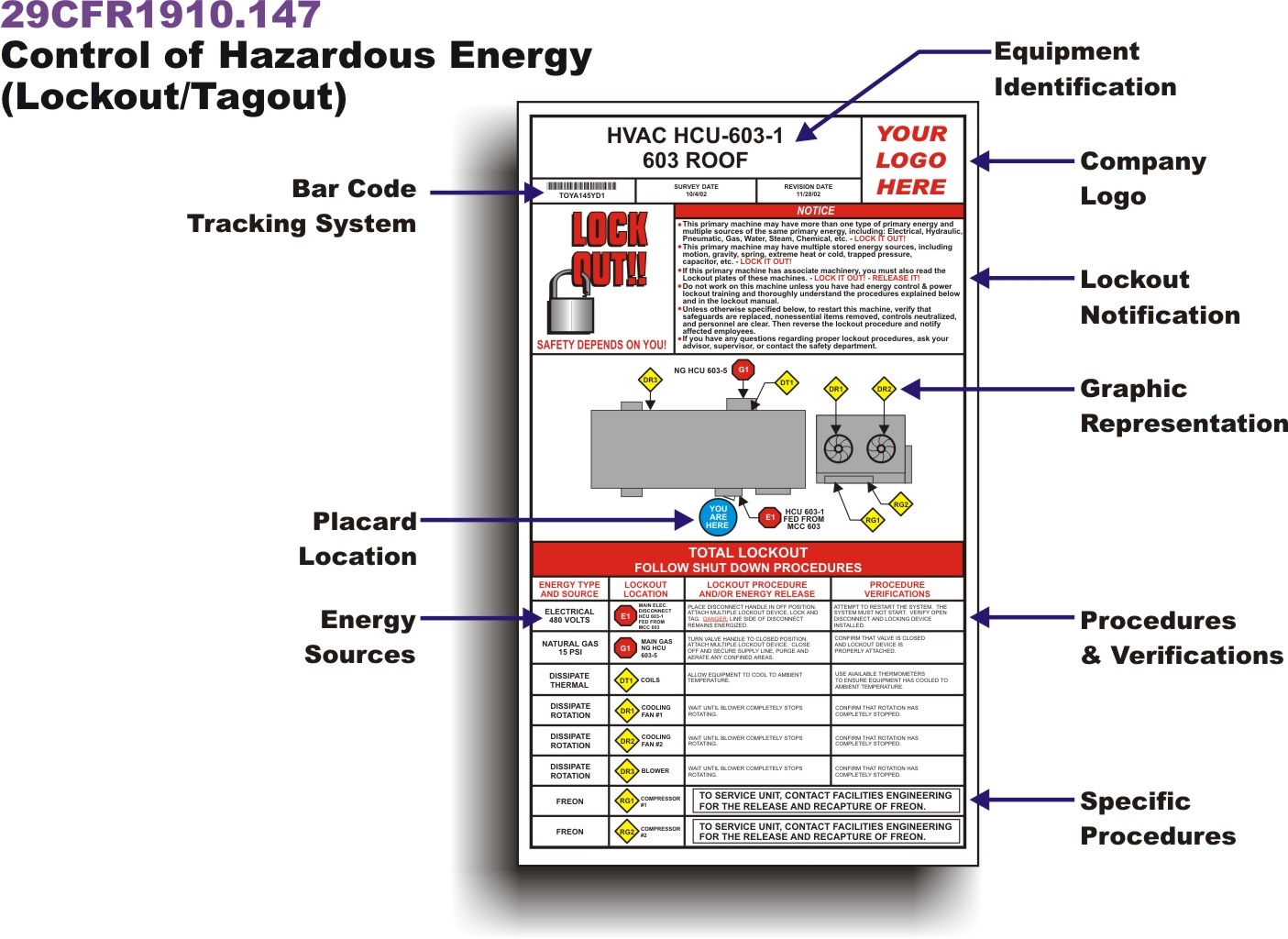
Machines don’t warn you before they start. That split-second burst of unexpected motion can crush, amputate, or kill. Yet every year, workers are injured during maintenance because power sources weren’t properly isolated. The solution? Lock out tag out procedures—structured safety protocols that eliminate accidental energization of equipment.
These procedures aren’t optional. They’re mandated by OSHA for any situation where employees service or maintain machines with hazardous energy sources. Whether it’s electrical, mechanical, hydraulic, pneumatic, chemical, or thermal energy, uncontrolled release is a real threat. Done right, LOTO saves lives. Done wrong, it creates a false sense of security.
Let’s break down how to implement effective lock out tag out procedures—step by step, with real-world clarity.
What Are Lock Out Tag Out Procedures?
Lock out tag out (LOTO) procedures are a set of safety steps used to de-energize machines and ensure they stay off during maintenance or servicing. "Lock out" refers to physically securing an energy-isolating device with a lock. "Tag out" means attaching a warning tag that identifies who locked the device, when, and why.
The goal is simple: prevent the unexpected startup of machinery or the release of stored energy. This applies to everything from conveyor belts and presses to boilers and robotic arms.
OSHA standard 29 CFR 1910.147 sets the baseline for these procedures. It requires employers to develop written energy control programs, train employees, and conduct regular audits. But compliance isn’t just about avoiding fines—it’s about protecting people.
A real-world example: In 2022, a maintenance worker at a Midwest packaging plant reached into a jammed conveyor to clear debris. The machine wasn’t locked out. A coworker restarted it remotely, resulting in a severe hand injury. This could have been prevented with a proper LOTO protocol.
The 6-Step LOTO Process Everyone Must Follow
Effective lock out tag out procedures follow a consistent sequence. Deviate from the steps, and risk increases exponentially. Here’s the standard workflow:
#### 1. Preparation Before any work begins, authorized employees must identify all energy sources powering the equipment. This includes main power lines, backup batteries, springs, gravity-fed systems, and pressurized fluids. A site-specific energy control plan should already exist, listing these sources.
Example: A hydraulic press may have electrical input, stored hydraulic pressure, and mechanical tension in its frame. All three must be addressed.
#### 2. Notification Inform all affected employees that maintenance is about to begin. This includes operators, supervisors, and anyone nearby. Communication prevents someone from unknowingly re-energizing equipment.
Tip: Use a logbook or digital check-in system to track who’s been notified.
#### 3. Machine Shutdown Shut down the equipment using normal stopping procedures—never rely on emergency stops alone. Verify it’s off by checking control panels and physical indicators.

#### 4. Isolation and Lockout Isolate every energy source. Flip breakers, close valves, block moving parts, or disconnect hoses. Then apply locks and tags. Each worker performing service must use their own personal lock. Group locks are acceptable only if each individual’s lock is part of a hasp system.
Common mistake: Using a single lock for multiple energy sources. Each source needs its own lock and tag.
#### 5. Release of Stored Energy Just because power is cut doesn’t mean energy is gone. Residual energy in capacitors, flywheels, or elevated components can still cause harm. Bleed pressure, ground circuits, or block parts from moving.
Example: A mechanic servicing a compressed air line must vent residual pressure before opening fittings—even if the main valve is closed and locked.
#### 6. Verification Attempt to start the machine using its normal controls. Do this only after ensuring no one is in harm’s way. If the machine doesn’t start, the lockout is successful. If it does, stop and re-evaluate.
Never skip verification. It’s the final test of your procedure’s effectiveness.
Who Is Responsible for LOTO Compliance?
Two roles define LOTO responsibility:
- Authorized employees perform the lockout. They’ve been trained to identify energy sources, apply locks, and verify isolation. These are typically maintenance technicians, engineers, or in-house mechanics.
- Affected employees operate or use the equipment but don’t perform maintenance. They must recognize when LOTO is in use and never remove locks or bypass safety systems.
Management holds ultimate responsibility. Supervisors must ensure procedures are documented, training occurs annually, and periodic inspections are conducted. OSHA requires at least one annual audit of each machine’s LOTO process.
Real-world gap: Many companies train authorized staff but neglect affected employees. A machine operator who doesn’t understand a red tag might remove it, thinking it’s just paperwork.
Common LOTO Mistakes That Lead to Injuries
Even experienced teams make errors. These are the most frequent missteps:
- Skipping documentation – Failing to write down procedures for each machine. OSHA requires machine-specific LOTO instructions.
- Using damaged locks or tags – Cracked locks or faded tags reduce reliability. Inspect tools regularly.
- Group lockout without a leader – When multiple workers lock one machine, a designated coordinator must manage the process.
- Assuming isolation = safety – Forgetting to drain capacitors, release tension, or block gravity-fed components.
- Delaying re-energization communication – Not notifying coworkers before removing locks and restarting equipment.
Case in point: A worker in a food processing facility was cleaning a mixer that had been locked out. The lock was removed by someone else during shift change, assuming maintenance was done. The mixer started mid-cleaning. The outcome: permanent nerve damage.
Clear procedures, strict accountability, and consistent training prevent these lapses.
Building a LOTO Program: What You Need
A strong energy control program includes:
- Written procedures for every machine
- LOTO training for all affected and authorized staff
- Periodic inspections (at least yearly)
- Proper hardware: locks, tags, hasps, valve covers, circuit breaker locks
- A compliance audit process
Use a checklist to ensure nothing’s missed:
| Item | Required? |
|---|---|
| Machine-specific LOTO procedures | ✅ |
| Employee training records | ✅ |
| Annual audits completed | ✅ |
| Lockout devices on-site | ✅ |
| Tags with employee name, date, reason | ✅ |
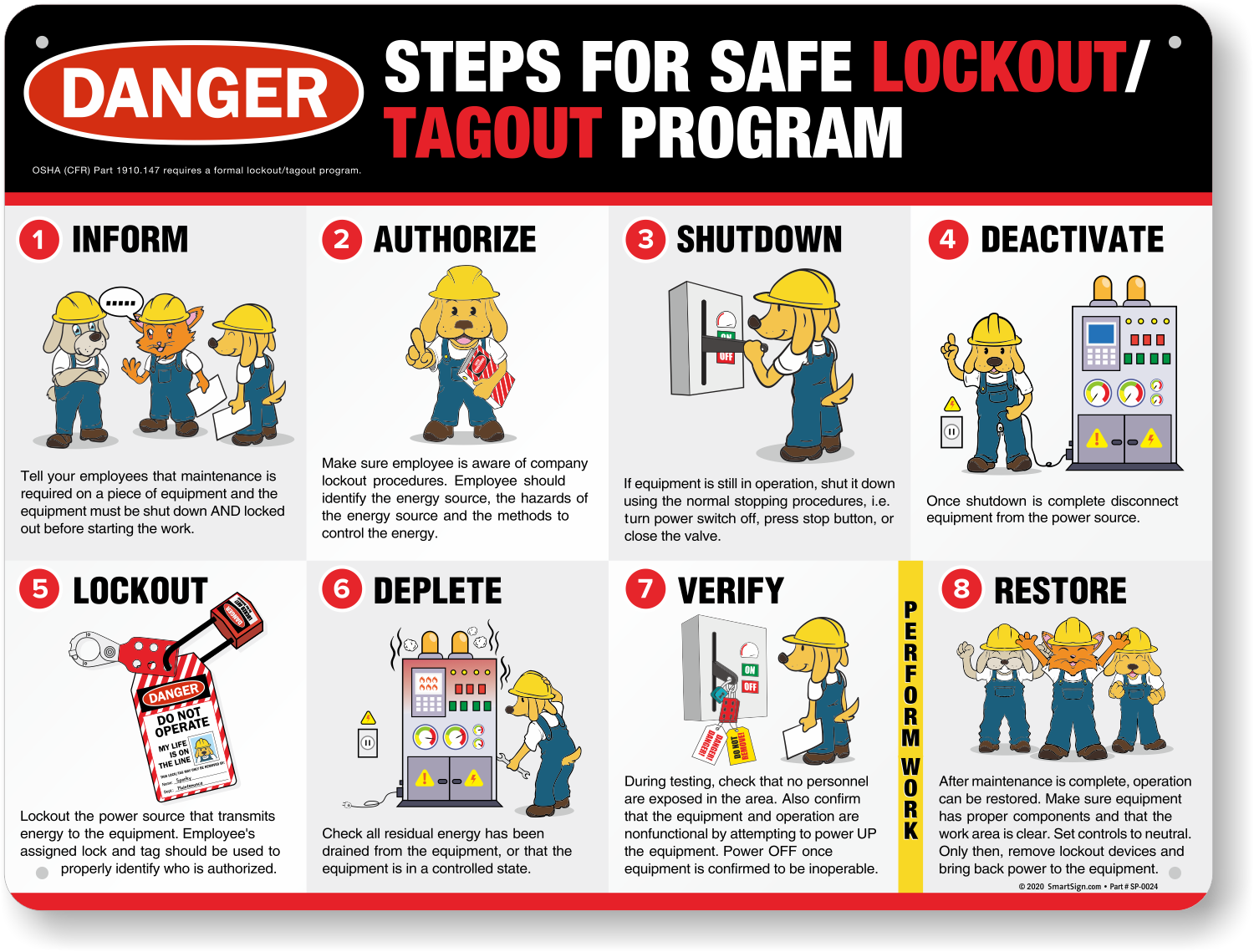
Hardware matters. Use lockout devices rated for the environment—stainless steel for wet areas, insulated locks for electrical panels. Tags must be durable, legible, and tamper-resistant.
Tip: Color-code locks by department or shift to improve tracking.
When LOTO Gets Complicated: Multi-Employer Sites
Contractors often work on equipment owned and operated by another company. This creates a compliance gray zone—but OSHA is clear: both employers share responsibility.
The host employer must: - Inform contractors about energy hazards - Provide site-specific LOTO procedures - Ensure coordination between teams
The contractor must: - Train their workers on the host’s procedures - Use compatible lockout devices - Verify isolation independently
Example: A chemical plant hires outside electricians to upgrade control panels. The plant’s LOTO procedure requires isolating both electrical and pneumatic lines. The electricians only lock the electrical source. A valve opens unexpectedly, releasing pressurized fluid. Shared responsibility means both parties failed.
Clear communication and joint planning eliminate these gaps.
Real-World LOTO Use Cases
- Preventive Maintenance on a CNC Machine
- A technician prepares to replace a spindle. They power down the unit, lock the main disconnect, tag the panel, bleed hydraulic lines, and verify no movement occurs when the start button is pressed. Only then do they begin work.
- Emergency Repairs on a Conveyor System
- A belt jams during production. The operator stops the line and notifies maintenance. The technician locks out the drive motor, secures gravity rollers with blocks, and places a tag stating “Repair in Progress – Do Not Operate.” The fix takes 20 minutes—time well spent safely.
- Cleaning a Mixing Vessel in a Brewery
- Residual pressure and rotating blades pose risks. The team isolates power, vents CO2 lines, locks valves, and uses a hasp system so multiple workers can apply personal locks. No one enters the vessel until all locks are in place and verified.
Each scenario follows the same core steps—but customization is key. One-size-fits-all procedures don’t work across industries.
Avoiding Complacency: The Silent LOTO Killer
The biggest threat to LOTO isn’t ignorance—it’s habit. Workers who perform the same task weekly may skip steps “just this once.” A tag left behind, a lock forgotten, a verification skipped.
This is where culture matters. Safety isn’t a checklist—it’s a mindset. Supervisors should: - Conduct unannounced audits - Recognize safe behavior publicly - Investigate near-misses aggressively
One plant reduced LOTO violations by 78% simply by having supervisors perform random daily checks and post results in the break room. Visibility drives accountability.
Final Steps to Strengthen Your LOTO Program
Don’t wait for an incident to act. Audit your current procedures. Are they machine-specific? Are tags up to date? Is training current?
- Start here:
- Review OSHA 1910.147 and ensure alignment
- Document LOTO procedures for every piece of equipment
- Train all affected and authorized employees
- Conduct a full-site audit with a checklist
- Schedule annual retraining and re-evaluation
Lock out tag out procedures aren’t bureaucracy—they’re barriers between workers and irreversible harm. When done correctly, they turn routine maintenance into safe, predictable work.
Protect your team. Lock it out. Tag it. Verify it. Every time.
Frequently Asked Questions
What is the difference between lock out and tag out? Lock out physically prevents energy restoration with a lock. Tag out uses a warning label. Tag out alone is less secure and only allowed when locks can’t be used.
Who can remove a lockout device? Only the authorized employee who applied the lock may remove it, unless a formal removal procedure is followed under supervision.
Are LOTO procedures required for corded plug-in equipment? Yes—if the plug is under the exclusive control of the worker and can’t be accidentally reconnected, unplugging may be sufficient. Otherwise, formal LOTO applies.
What should a LOTO tag include? Name of the authorized employee, date, time, and reason for the lockout.
Can multiple people use one lock during group maintenance? No. Each worker must apply their own lock. Use a group lockout hasp to secure multiple locks on one isolation point.
Do LOTO procedures apply to robotic systems? Yes. Robots store kinetic and electrical energy. Isolate power, block movement, and verify de-energization before any intervention.
How often should LOTO procedures be audited? At least annually for each machine or process, as required by OSHA.
FAQ
What should you look for in Lock Out Tag Out Procedures: A Complete Safety Guide? Focus on relevance, practical value, and how well the solution matches real user intent.
Is Lock Out Tag Out Procedures: A Complete Safety Guide suitable for beginners? That depends on the workflow, but a clear step-by-step approach usually makes it easier to start.
How do you compare options around Lock Out Tag Out Procedures: A Complete Safety Guide? Compare features, trust signals, limitations, pricing, and ease of implementation.
What mistakes should you avoid? Avoid generic choices, weak validation, and decisions based only on marketing claims.
What is the next best step? Shortlist the most relevant options, validate them quickly, and refine from real-world results.