Workers are injured every year in Australian industrial facilities because machinery was not properly de-energised before maintenance. Some incidents are fatal. The root cause? A failed or absent lockout tagout (LOTO) procedure. In high-risk sectors like manufacturing, mining, construction, and energy, uncontrolled release of hazardous energy—electrical, mechanical, hydraulic, pneumatic, chemical, or thermal—is a constant threat.
Australia’s Occupational Health and Safety (OHS) laws make it clear: employers must control these risks. The lockout tagout procedure is not a suggestion. It’s a legal obligation and a fundamental line of defence.
This guide breaks down the LOTO procedure in the Australian context. You’ll understand regulatory drivers, the step-by-step process, common pitfalls, and real-world applications that ensure compliance and, more importantly, worker safety.
What Is Lockout Tagout in the Australian Context?
Lockout tagout (LOTO) is a safety procedure used to isolate energy sources from machinery or equipment during maintenance, servicing, or cleaning. It prevents accidental startup or release of stored energy that could harm personnel.
In Australia, LOTO is not a standalone regulation but a practical control measure required under broader OHS legislation. Each state and territory has its own OHS framework, but all align with the model Work Health and Safety (WHS) Act and Regulations. These laws place a primary duty of care on PCBUs (Persons Conducting a Business or Undertaking) to ensure worker health and safety, so far as is reasonably practicable.
LOTO is a key method to meet this duty when working with energised equipment.
How LOTO Works: The Dual Protection
- Lockout: A physical lock is applied to an energy-isolating device (e.g., circuit breaker, valve) so only the authorised worker can re-energise the system.
- Tagout: A durable, standardised tag is attached to the lock, explaining why the equipment is isolated, who locked it, and when. It acts as a warning and communication tool.
While tagout alone is sometimes used where lockout isn’t feasible, lockout is the preferred and stronger control.
Legal and Regulatory Framework for LOTO in Australia
There is no single “LOTO law” in Australia, but the requirement is embedded in multiple standards and regulations.
Key Legislation and Standards
- Work Health and Safety Act 2011 (Model) – Adopted in most jurisdictions, it outlines duties for managing risks from hazardous energy.
- WHS Regulations – Specifically, Regulation 61 requires control of risk from hazardous energy during maintenance.
- AS/NZS 4836:2011 – Safe working on low-voltage electrical installations – While focused on electrical work, it reinforces isolation principles applicable to LOTO.
- AS/NZS 3000:2018 – Electrical installations (Wiring Rules) – Mandates safe isolation practices.
These documents don’t say “use LOTO” verbatim, but they require equipment to be isolated, secured, and tested—exactly what LOTO delivers.
Who Is Responsible?
- PCBUs must develop, document, and enforce LOTO procedures.
- Managers and supervisors ensure procedures are followed.
- Authorised workers must be trained and follow protocols strictly.
- Maintenance personnel apply and remove locks only for their own protection.
Failure to comply can lead to prosecution, fines, and, in extreme cases, imprisonment under industrial manslaughter laws in states like Victoria and Queensland.
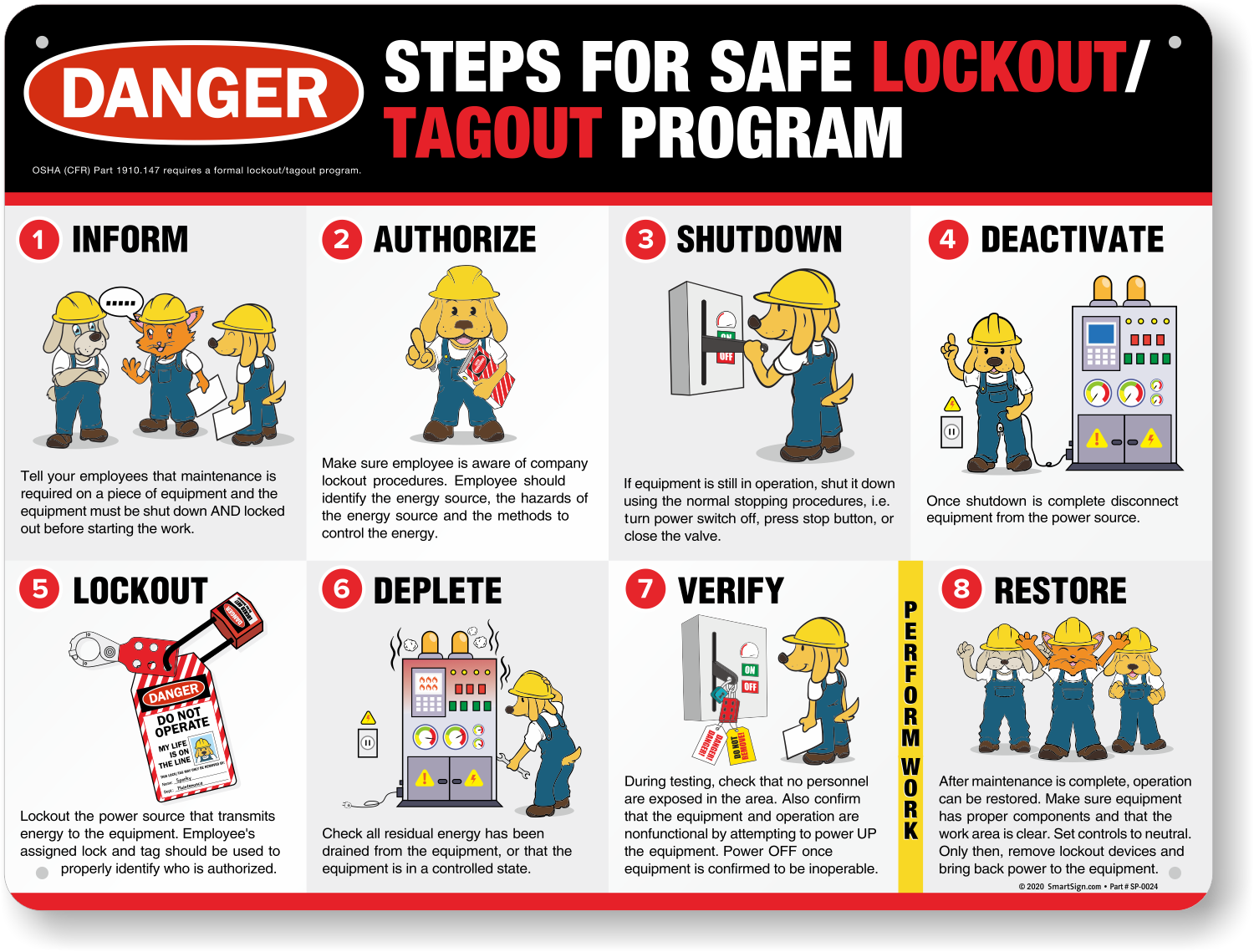
Step-by-Step Lockout Tagout Procedure in Australia
A reliable LOTO process isn’t guesswork. It follows a defined sequence. Deviate, and risk increases.
1. Preparation
Before shutdown, the authorised worker must: - Identify all energy sources (electrical, hydraulic, springs, gravity, etc.). - Review the site-specific LOTO procedure. - Gather necessary locks, tags, and test equipment.
Common Mistake: Assuming one energy source. A conveyor, for example, may have electrical drive, tensioned belts (mechanical), and hydraulic tensioners—three isolation points.
2. Notify Affected Personnel
Alert all workers who might be impacted by the shutdown. This includes operators, nearby teams, and contractors. Communication prevents confusion and unauthorised attempts to restart.
3. Equipment Shutdown
Shut down the machine using normal stop procedures. Never rely on emergency stops as isolation points.
4. Isolate All Energy Sources
This is the core of LOTO. Use approved isolation devices: - Circuit breakers with lockable handles - Isolation switches - Valve lockouts - Plug lockouts for portable tools
Each energy source must be physically disconnected and secured.
5. Apply Locks and Tags
Each worker applying isolation places their own lock and tag on each isolation point. This is non-transferable. Group lockout boxes may be used for team work, but individual locks still apply.
Tags must include: - Worker’s name - Date and time - Reason for isolation - Contact details
6. Release Stored Energy
After isolation, residual energy must be safely dissipated: - Bleed hydraulic lines - Lower suspended loads - Discharge capacitors - Block or relieve mechanical tension
7. Verify Isolation (The
Most Critical Step)
Before work begins, test the controls. Press the start button. Check voltage with a multimeter. Observe for movement or pressure. This proves zero energy state.
Real-World Example: In a Perth food processing plant, a technician bypassed verification and opened a mixer. Residual pressure ejected product, causing serious injury. A test could have prevented it.
8. Perform Maintenance
Only now can work proceed. The machine is confirmed dead and secured.
9. Remove LOTO
After work: - Ensure tools are clear. - Notify all personnel. - Only the worker who applied the lock can remove it. - Re-energise in reverse order.
Never remove another person’s lock—even if they’re on break.
Common LOTO Failures in Australian Workplaces
Even with procedures in place, failures happen. Here are recurrent issues observed across industries:
- Shared locks or keys – Violates personal accountability.
- Missing stored energy checks – Springs, gravity, or capacitors overlooked.
- Inadequate training – Workers don’t understand energy types or verification.
- Poor tagging – Tags missing info or not weather-resistant.
- Skipping verification – Assuming isolation worked without testing.
- Rushed removal – Locks taken off before work is fully complete.
In a 2022 incident in NSW, a maintenance worker was crushed when a conveyor restarted. The root cause? A colleague removed the lock, thinking the job was done. Personal locks and strict removal rules could have saved a life.
LOTO Best Practices for Australian Businesses
Compliance isn’t box-ticking. It’s culture. Here’s how to build an effective LOTO system:
1. Develop Clear, Site-Specific Procedures
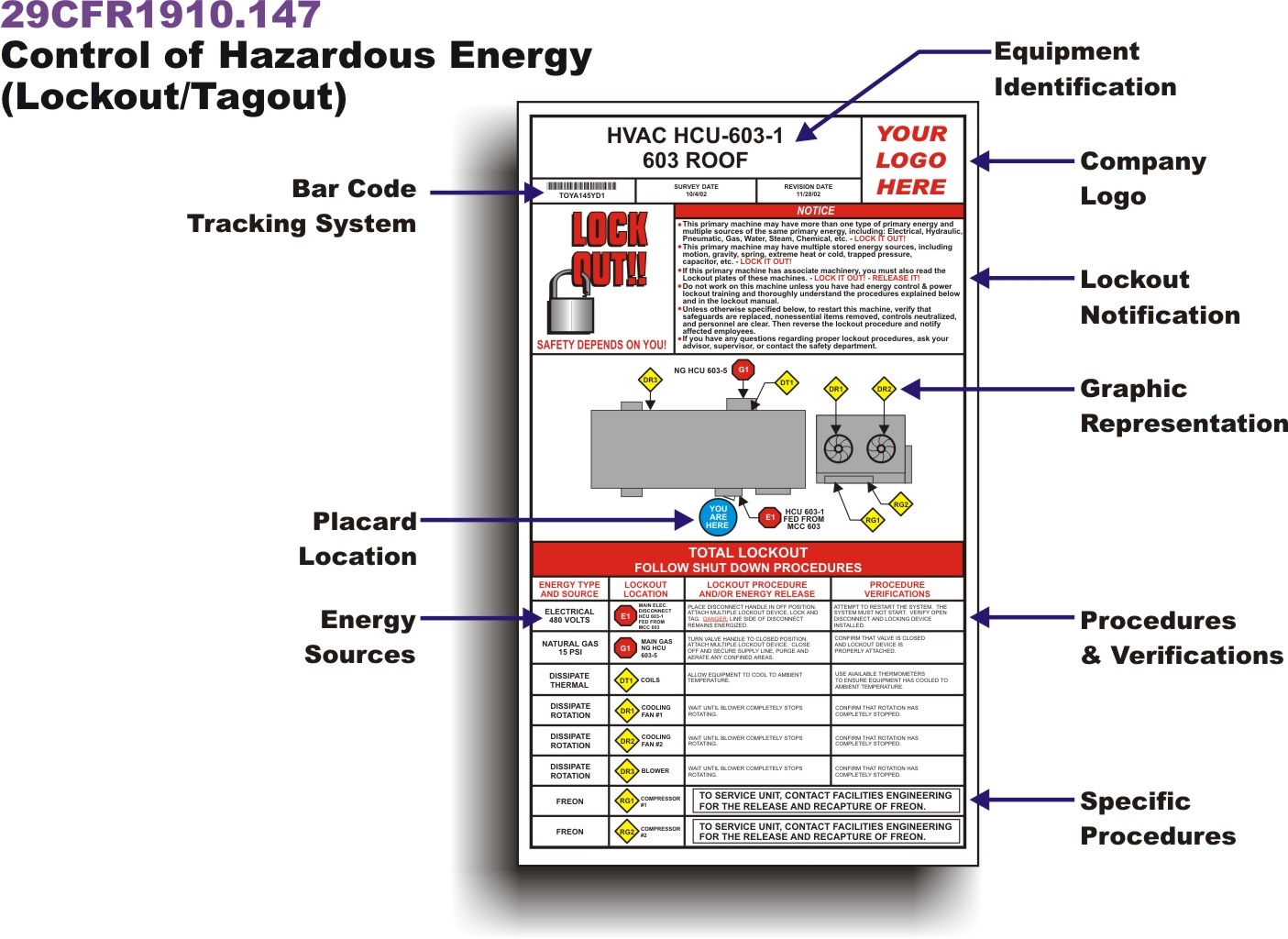
Generic LOTO steps won’t work. Each machine needs a tailored procedure listing: - Energy sources - Isolation points - Lockout devices needed - Verification method
Store these in a central, accessible register.
2. Use the Right Equipment
Standardise on durable, visible locks and tags. Use: - Hasps for multiple locks - Valve lockouts - Circuit breaker locks - Plug safes for portable tools
Colour-coding can help—red for electrical, yellow for mechanical.
3. Train and Authorise Workers
Only trained personnel should perform LOTO. Training should cover: - Energy hazards - Procedure steps - Use of tools - Emergency response
Re-train every two years or after an incident.
4. Audit and Enforce
Conduct surprise audits. Watch workers perform LOTO. Check lock usage, tags, and verification. Address non-compliance immediately.
One Victorian mine reduced LOTO errors by 74% after introducing monthly audits and peer reviews.
5. Integrate
with Permit Systems
In high-risk environments, combine LOTO with work permits. The permit confirms isolation, defines scope, and ensures communication.
Industries Where LOTO Is Non-Negotiable in Australia
While all workplaces with equipment should have LOTO policies, these sectors face the highest stakes:
- Manufacturing – Assembly lines, presses, robots
- Mining – Conveyor systems, crushers, drills
- Construction – Cranes, hoists, power tools
- Utilities – Water pumps, electrical substations
- Agriculture – Silo augers, tractors, harvesters
In each, the consequences of failure are severe—crushing, amputation, electrocution, or fire.
A dairy processor in Tasmania avoided a major incident when LOTO prevented re-energising a pasteuriser during cleaning. Residual steam and motion could have scalded or trapped the worker.
Practical LOTO Tools and Equipment Available in Australia
The right tools make LOTO reliable and consistent. Here are five widely used LOTO products available from Australian safety suppliers:
| Product | Purpose | Key Features |
|---|---|---|
| Brady B400 Lockout Station | Central storage for locks, tags, hasps | Wall-mounted, weather-resistant, customisable |
| Master Lock 4690DAT Lockout Hasp | Allows multiple workers to lock one point | 50mm opening, polypropylene body, corrosion-resistant |
| 3M 4000 Series Electrical Lockout | Circuit breaker lockout | Fits most domestic and industrial breakers |
| Safelink SL-VL1 Ball Valve Lockout | Secures open/closed valves | Adjustable, UV-resistant, high-visibility yellow |
| De_LOCK_out DL-PL1 Plug Lockout | Prevents plug reinsertion | Works with 10A and 15A plugs, durable plastic |
These tools are stocked by major suppliers like Safework, Bunnings Trade, and Core Safety. Always ensure compliance with AS/NZS standards.
Conclusion: LOTO Is Not Optional—It’s Essential
In Australia, a robust lockout tagout procedure isn’t just good practice—it’s a legal requirement and a moral imperative. Every uncontrolled machine is a potential hazard. Every skipped step is a risk multiplier.
Design clear procedures. Train your people. Use the right tools. Verify every isolation. And never, ever assume.
Start today: audit one machine, document its energy sources, and implement a LOTO procedure. That single action could prevent a life-changing injury tomorrow.
FAQ
What is the purpose of a lockout tagout procedure in Australia? To ensure machinery is completely de-energised and cannot be restarted during maintenance, protecting workers from hazardous energy release.
Who can perform lockout tagout in Australia? Only authorised, trained workers who are responsible for the maintenance task and have been designated by the employer.
Is tagout as effective as lockout? Tagout alone is less secure. Lockout provides physical prevention; tagout is only a warning. Lockout is preferred and required where feasible.
Do small businesses in Australia need LOTO procedures? Yes. Size doesn’t exempt a PCBU from their duty under WHS laws to control risks, including those from hazardous energy.
What happens if LOTO isn’t followed? It can lead to serious injuries or fatalities, regulatory fines, prosecution, and breaches of WHS legislation, including industrial manslaughter charges.
Can multiple people work on the same machine under LOTO? Yes, using a group lockout box or hasp. Each worker applies their own lock. The machine stays isolated until all locks are removed.
Are there Australian standards specifically for LOTO? No standalone standard, but LOTO is supported by AS/NZS 4836:2011 and required under WHS Regulations for controlling hazardous energy.
FAQ
What should you look for in Lockout Tagout Procedure Australia: A Complete Guide? Focus on relevance, practical value, and how well the solution matches real user intent.
Is Lockout Tagout Procedure Australia: A Complete Guide suitable for beginners? That depends on the workflow, but a clear step-by-step approach usually makes it easier to start.
How do you compare options around Lockout Tagout Procedure Australia: A Complete Guide? Compare features, trust signals, limitations, pricing, and ease of implementation.
What mistakes should you avoid? Avoid generic choices, weak validation, and decisions based only on marketing claims.
What is the next best step? Shortlist the most relevant options, validate them quickly, and refine from real-world results.