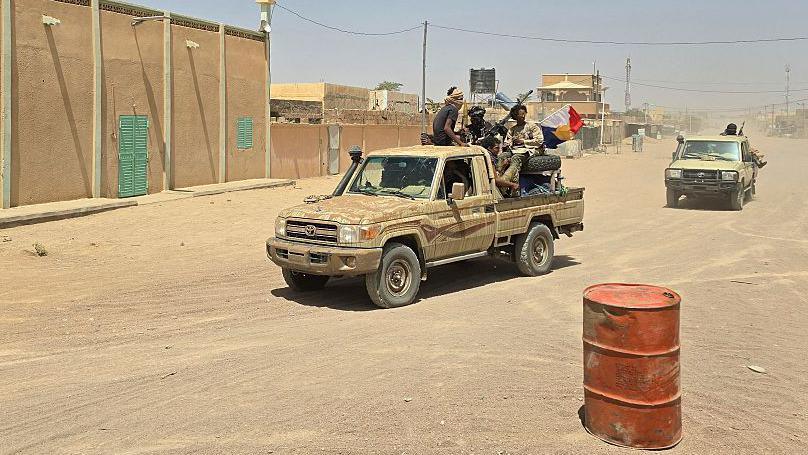
Kidal, a flashpoint in northern Mali’s long-running insurgency, is once again at the epicenter of strategic upheaval. Recent reports confirm that Russia’s Africa Corps — widely seen as the successor to the Wagner Group — has withdrawn its forces from the region following a surge in armed attacks. This retreat marks a critical shift in Moscow’s footprint across the Sahel, raising urgent questions about the trajectory of Mali’s fight against jihadist insurgents and the broader implications for foreign military involvement in West Africa.
The withdrawal did not occur in isolation. It follows a series of coordinated assaults on military outposts in the Kidal region, targeting both Malian army units and foreign forces. The Africa Corps’ decision to pull back underscores a deteriorating security environment — and suggests that even seasoned paramilitary actors are reassessing the risk-reward calculus of their Sahel operations.
Why Kidal Matters in Mali’s Security Crisis
Kidal isn’t just another desert town. It’s a symbolic and strategic stronghold for Tuareg separatist movements and a battleground for control over northern Mali’s vast, porous terrain. Historically resistant to central authority, the region has seen repeated uprisings, most recently reignited after the 2020 and 2021 coups that dismantled Mali’s civilian government.
Control over Kidal means influence over key smuggling routes, access to mineral resources, and command of a gateway to neighboring Niger and Algeria. For jihadist groups like Jama’at Nusrat al-Islam wal-Muslimin (JNIM) and the Islamic State in the Greater Sahara (ISGS), the region offers both sanctuary and logistical depth.
Russia’s Africa Corps established a presence in Kidal in 2023, filling a vacuum left by the departure of French forces and the faltering reach of MINUSMA, the UN peacekeeping mission. Their deployment was sold as a stabilizing force — combat-ready, uncompromising, and less constrained by Western rules of engagement. But that calculus has clearly changed.
The Escalation That Forced the Withdrawal
In the six weeks leading up to the withdrawal, the Kidal region experienced a 40% spike in armed incidents, according to data from the Armed Conflict Location & Event Data Project (ACLED). Notable attacks include:
- April 3 ambush on a joint Malian-Africa Corps patrol, killing at least 12 soldiers and two Russian personnel.
- April 11 mortar assault on a forward operating base, destroying a fuel depot and two armored vehicles.
- Coordinated raids on April 16 targeting communication towers and supply convoys, likely executed by ISGS units with drone-supported reconnaissance.
These attacks weren’t random. They demonstrated improved coordination, tactical intelligence, and access to advanced weaponry — hallmarks of a maturing insurgency. Sources within the Malian military suggest that the Africa Corps suffered significant morale degradation, with reports of internal disputes over mission continuity and mounting pressure from Moscow to avoid another high-profile casualty event like the 2019 Tongo Tongo ambush in Niger.
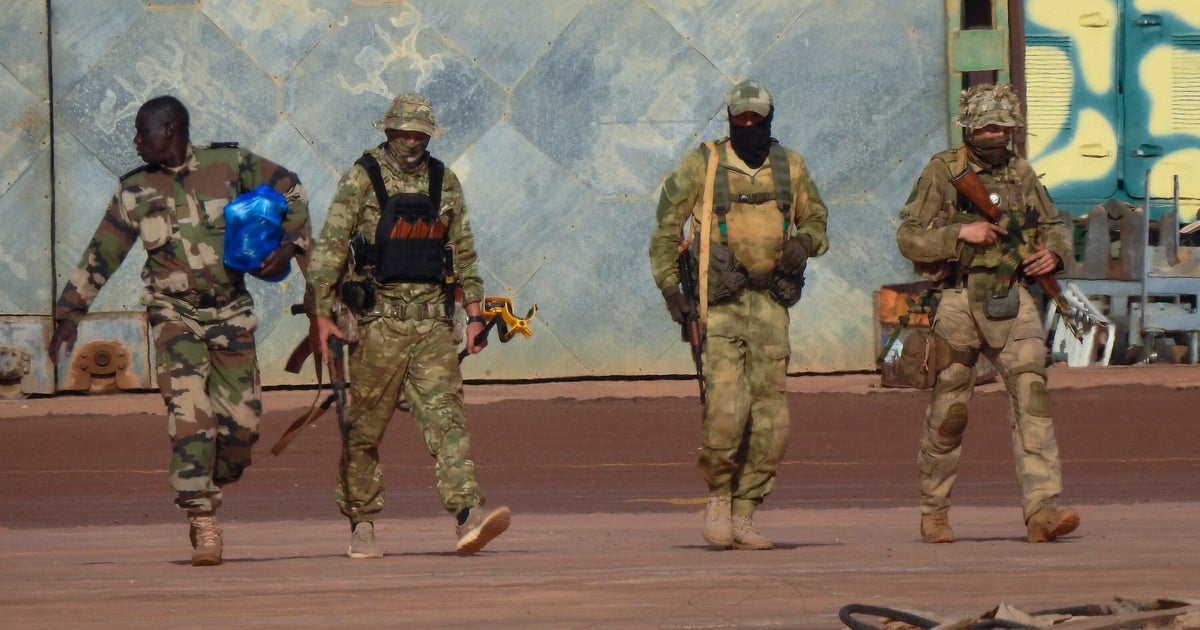
The decision to withdraw appears to have been reactive rather than strategic. Unlike the planned French exit, which involved phased drawdowns and public diplomacy, the Africa Corps’ departure was abrupt — described by regional analysts as a “tactical disengagement under duress.”
Russia’s Africa Corps: A Shifting Role in the Sahel
The Africa Corps emerged in late 2023 as Russia’s formalized military-commercial interface in Africa, absorbing remnants of the Wagner Group after Yevgeny Prigozhin’s death. While officially under Russian Defense Ministry oversight, it operates with significant autonomy, leveraging private military company (PMC) structures to circumvent diplomatic scrutiny.
Its mandate in Mali was clear: bolster the junta’s military capacity, secure key infrastructure, and counter jihadist expansion. Initially, the Corps deployed to Mopti and Gao, later expanding into Kidal in early 2024. Their tactics mirrored Wagner’s — heavy use of air support, brutal counterinsurgency raids, and close coordination with Malian special forces.
But the Kidal deployment proved costlier than anticipated. Unlike central Mali, where the population is more fragmented, Kidal’s strong Tuareg identity fostered deep local resistance to foreign military presence — especially one associated with indiscriminate violence. Human rights organizations documented at least 17 civilian casualties linked to Africa Corps operations in the region between February and April.
This alienation may have eroded intelligence networks, making the Corps more vulnerable to ambushes. As one regional security analyst noted: “You can’t fight a shadow war without local eyes. The Africa Corps burned those bridges fast.”
What the Withdrawal Means for Mali’s Military
The departure of Russian forces from Kidal leaves a dangerous void. The Malian army, despite receiving new armored vehicles and helicopters from Russia, lacks the training and manpower to maintain control over such remote and hostile territory. Previous attempts to hold Kidal without foreign support have ended in retreat or defeat.
Consider the 2023 offensive to retake the town of Tinzaouaten, just south of the Algerian border. Malian troops, backed by Wagner units, briefly reclaimed the area — only to lose it months later when support was withdrawn. The same pattern may now repeat in Kidal.
Moreover, the psychological impact is significant. The junta has spent years promoting the Africa Corps as an invincible force — a narrative now undermined by their sudden exit. This could embolden both insurgents and rival factions within Mali’s fractured political landscape.
Already, the Coordination of Azawad Movements (CMA), a coalition of Tuareg separatist groups, has issued statements reclaiming “historical sovereignty” over northern territories. If clashes resume between the Malian army and CMA-aligned militias, the country risks sliding into a full-scale civil conflict — one that foreign jihadists could exploit to reassert influence.
Regional Implications: A Domino Effect in the Sahel?
Mali is not an isolated case. The Sahel has become a patchwork of military juntas, foreign mercenaries, and transnational insurgent networks. The Africa Corps’ retreat from Kidal may signal a broader reassessment of Russian strategy across the region.
Niger and Burkina Faso — both under military rule and aligned with Mali in the Alliance of Sahel States (ASS) — are also host to Russian security personnel. If the security situation deteriorates in those countries, Moscow may face similar pressure to recalibrate or withdraw.

There are also diplomatic ramifications. The U.S. and EU have long criticized Russia’s use of PMCs in Africa as exploitative and destabilizing. The Kidal withdrawal could be used to argue that even Russia’s unconventional forces are unequipped to manage the Sahel’s complexity — reinforcing calls for locally-led, governance-focused security solutions.
At the same time, the vacuum left by the Africa Corps could invite other actors. China, increasingly active in African security through training and infrastructure, may expand its soft-power engagement. Turkey has already deployed drones to Niger. The competition for influence is intensifying — but without a coherent regional strategy, it risks fueling further instability.
Lessons from the Ground: What Works — and What Doesn’t
The failure to hold Kidal offers hard lessons for future security operations in the Sahel:
- Local legitimacy matters. No foreign force, no matter how well-armed, can sustain control without community cooperation. Heavy-handed tactics breed resentment, not loyalty.
- Intelligence beats firepower. Repeated attacks on supply convoys prove that insurgents adapt quickly. Persistent surveillance, human intelligence, and community engagement are more valuable than air strikes.
- Withdrawals must be planned. Sudden exits — especially reactive ones — create power vacuums. A phased drawdown with local capacity-building is essential.
- Separatist and jihadist threats require different responses. Conflating Tuareg nationalism with jihadism leads to strategic errors. Tailored political and military approaches are needed.
One successful example is Mauritania’s border security model, which combines mobile patrols, cross-border intelligence sharing, and community dialogue. Though smaller in scale, it has prevented major jihadist incursions — a contrast to Mali’s reliance on external muscle.
What Comes Next for Mali and the Africa Corps
Russia is unlikely to abandon Mali completely. The Africa Corps still maintains bases in Gao and Bamako, and arms shipments continue. But the Kidal withdrawal suggests a strategic pivot — toward advisory roles, air support, and protection of high-value assets rather than frontline counterinsurgency.
For Mali’s junta, the immediate challenge is preventing a security collapse in the north. That means either negotiating with local actors — a politically risky move — or attempting to hold Kidal with overstretched forces. Neither option is promising.
Meanwhile, civilians in the region face renewed uncertainty. Displacement is rising. Humanitarian access is shrinking. And with no clear path to peace, the cycle of violence shows no signs of ending.
The Africa Corps’ exit from Kidal isn’t just a military footnote. It’s a warning: foreign interventions, especially those built on coercion and opacity, have limits. In the Sahel, sustainable security won’t come from mercenaries, but from governance, inclusion, and long-term investment.
Final Assessment: A Strategic Pause — Not a Retreat
The Russia-linked withdrawal from Kidal is less a defeat than a recalibration. It reflects the limits of military-only solutions in complex insurgencies. For policymakers, the takeaway is clear: no external force can substitute for legitimate, locally rooted security institutions.
As Mali grapples with escalating attacks and dwindling support, the focus must shift from battlefield tactics to political solutions. That includes engaging marginalized communities, reforming the military, and rebuilding trust in governance. Without these, even the most elite foreign corps will find Kidal — and the Sahel — unconquerable.
For now, the desert holds its breath. The Africa Corps has stepped back. The insurgents are watching. And Mali’s future hangs in the balance.
FAQ
What should you look for in Mali Attacks: Russia’s Africa Corps Leaves Kidal Amid Escalation? Focus on relevance, practical value, and how well the solution matches real user intent.
Is Mali Attacks: Russia’s Africa Corps Leaves Kidal Amid Escalation suitable for beginners? That depends on the workflow, but a clear step-by-step approach usually makes it easier to start.
How do you compare options around Mali Attacks: Russia’s Africa Corps Leaves Kidal Amid Escalation? Compare features, trust signals, limitations, pricing, and ease of implementation.
What mistakes should you avoid? Avoid generic choices, weak validation, and decisions based only on marketing claims.
What is the next best step? Shortlist the most relevant options, validate them quickly, and refine from real-world results.